
Among the reasons I applied to the Communications@Syracuse program was to learn how to be more adept at understanding and applying digital data in my professional workspace. I see that skill as necessary for survival in the communications profession, regardless of the specific employer. I can write a really great press release, but that’s no longer good enough. Data and metrics are the future of this industry, and unless I understand them and know how to make them work for my employer, I will not have a job. Since I am decades away from retirement age, that’s a terrifying prospect that I will fight aggressively.
Some data collection does not bother me personally. I actually like that I see advertising content online that is relevant to my specific interests. As a healthy person, I love not having to suffer through interminable ads for items such as pharmaceuticals that I have no use for because I happen to fall into a demographic that might need them. I’m annoyed by everything about those ads; from their inexplicably joyful actors to the never-ending list of possible and horrible side effects. I particularly hate the insipid brand names these drugs are given – as though some marketer took some vaguely positive-sounding work and slapped it onto some random, science-fiction-y sounding combination of letters. Like “Celebrex”: “Celebrate! And watch out for the bloody diarrhea and death!”
But I digress. I rarely watch live TV anymore, but in the event that I do, (typically sporting events), I object to the carpet bombing approach. How can that possibly be effective, I wonder? The digital, online ads I see are for stuff I might actually buy, and it costs the businesses almost nothing to show it to me, and they can actually use data to measure the effectiveness of the campaign. It seems like a win/win.
But then we begin to hear about all the ways data might be used against us. Or even against society at large in the case of the Cambridge Analytica scandal. We know Facebook mines our Gmail in addition to our Google searches. It might seem innocuous, but it’s also an invasion of privacy. But without the ability to commoditize users like me, shamelessly taking advantage of the free services these companies offer, would there be a profit motive to continue offering these services? My guess is no.
What is ugly is the prospect of how all this data might be used in the future, in ways we haven’t even thought about (although some futurists undoubtedly have.) For example: Like many others, I am a proud mom who often brags about my kids on Facebook. (Yeah, sue me.) I sometimes see other moms posting about their kids’ health issues. Usually nothing serious, maybe just frequent colds or asthma attacks. Could insurance companies of the future potentially use that data to produce actuarial tables that show the future adult is at higher health risk and deny or escalate the costs of health or life insurance? Why wouldn’t they if the data is all accessible and would reduce their costs? It’s a scary prospect and makes me really think carefully about what I am saying in the online space.
Is it a matter of intelligence or education in choosing to share or not share?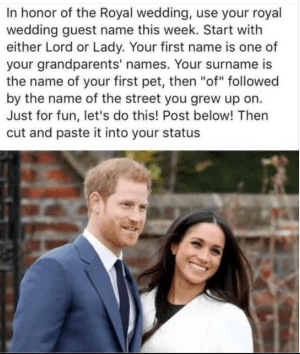 Not necessarily.
Over the summer, during Prince Harry wedding fever, I noticed an interesting meme going around social media. The meme encouraged viewers to create and post in a public forum their “royal wedding name” by combining their first pet’s name, name of the street on which they grew up and grandparent’s name. I immediately recognized all of those as security questions on websites I frequently use. “Um, yeah not on your life,” I thought to myself, but was surprised to see several savvy, smart friends engaging with this meme, using it as a fun social experiment. Why did they not recognize it? Were they giving fake answers? Tens of thousands of Facebook users shared answers. I bet they weren’t all fake. And you know what else? Back in the early days of social media before we began thinking about data mining and information security, I’m sure I publicly shared my first pet’s name somewhere too.
My point is we have to be so careful with all this in order to avoid becoming victims. It makes me begin to have a bit more respect for those annoying ol’ fuddy duddys who won’t use social media at all. Back to my original point, data IS the future and we are either going to use it correctly and safely or be crushed by it. But hey, it beats going back to the days of having pharmaceutical ads rammed down our throats.
 Lori Rasmussen
Leave a comment